Thursday, January 17, 2013

Who are you writing your paper with?


Choosing who you work with plays an important role in who you become as a scientist. Every grad student knows this is true about choosing a supervisor, and we’ve all heard the good, the bad, and the ugly when it comes to student-advisor stories. But writing a paper with collaborators is like dealing with the supervisor-supervisee relationship writ small. Working with coauthors can be the most rewarding or the most frustrating process, or both. Ultimately, the combination of personalities involved merge in such a way as to produce a document that is usually more (but sometimes less) than the sum of its parts. The writing process and collaborative interactions are fascinating to consider all on their own.

Field Guide to Coauthors
The Little General
The Little General is willing to battle till the death for the paper to follow his particular pet idea. Regardless of the aim or outcome of an experiment, a Little General will want to connect it to his particular take on things. Two Little Generals on a paper can spell disaster.
Little General
The Silent Partner
These are the middle authors, the suppliers of data and computer code, people who were involved in the foundations of the work, but not actively a part of the writing process.
Silent Partner
The Nay-sayer
These are the coauthors who disagree, seemingly on principle, with any attempt to generalize the paper. Given free rein, such authors can prevent a work from having any generality beyond the particular system and question in the paper. These authors do help a paper become reviewer-proof, since every statement left in the paper is well-supported.
Nay-sayer

The Grammar Nazi
The Grammar Nazi returns your draft of the paper covered in edits, but he has mostly corrected for grammar and style rather than content. This is not the worst coauthor type, although it can be annoying, especially if these edits are mostly about personal taste.
Grammar Nazi
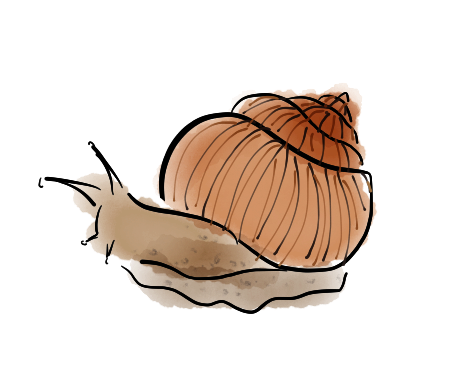
The Snail
This is the coauthor that you just don’t hear from. You can send them reminder emails, give them a phone call, pray to the gods, but they will take their own sweet time getting anything back to you. (And yes, they are probably really busy).

 The Cheerleader
The Cheerleader can encourage you through a difficult writing process or fuel an easy one. These are the coauthors who believe in the value of the work and will help motivate you through multiple edits, rejections, or revisions, as needed.
Cheerleader
The Good Samaritan
The Good Samaritan is a special type of person. They aren’t authors of your manuscript, but they read it for you out of pure generosity  They might provide better feedback and more useful advice than any of your actual coauthors. They always end up in the acknowledgements, but you often feel like you owe them more.
Good Samaritan
The Sage
The Sage is probably your supervisor or some scientific silverback. They read your manuscript and immediately know what’s wrong with it, what it needs, and distill this to you in a short comment that will change everything. The Sage will improve your work infinitely, and make you realize how far you still have to go.
Sage

There are probably lots of other types that I haven't thought of, so feel free to describe them in the comments. And, it goes without saying that if you coauthored a paper with me, you were an excellent coauthor with whom I have no complaints. Especially Marc Cadotte, who is often both Cheerleader and Sage :)

Thanks to Lanna Jin for the amazing illustrations!


Wednesday, January 9, 2013

Replicable methods

This has been making the internet rounds: If you were being truly honest in your methods, what would you say?
Overly honest methods in science

Mine would probably something like: "We had a sample size of 260 individuals. It may sound like we planned to have 260 plants, but actually 40 seedlings died, luckily leaving us with a nice round number."

A friend joked that hers would be: "All this work was done with a totally different experiment in mind, but this is all I could salvage."

I'm sure everyone has a few of these...

Monday, January 7, 2013

Reinventing the ecological wheel – why do we do it?


Are those who do not learn from (ecological) history are doomed to repeat it?

A pervasive view within ecology is that discovery tends to be inefficient and that ideas reappear as vogue pursuits again and again. For example, the ecological implications of niche partitioning re-emerges as an important topic in ecology every decade or so. Niche partitioning was well represented in ecological literature of the 1960s and 1970s, which focused theoretical and experimental attention on how communities were structured through resource partitioning. It would be fair to say that the evolutionary causes and the ecological consequences of communities structured by niche differences were one of the most important concepts in community ecology during that time. Fast-forward 30 years, and biodiversity and ecosystem functioning (BEF) research slowly  has come to the conclusion that niche partitioning to explains the apparent relationship between species diversity and ecosystem functioning. Some of the findings in the BEF literature could be criticized as simply being rediscoveries of classical theory and experimental evidence already in existence. How does one interpret these cycles? Are they a failure of ecological progress or evidence of the constancy of ecological mechanisms?

Ecology is such a young science that this process of rediscovery seems particularly surprising. Most of the fundamental theory in ecology arose during this early period: from the 1920s (Lotka, Volterra), 1930s (Gause) to 1960s (Wilson, MacArthur, May, Lawton, etc). There are several reasons why this was the foundational period for ecological theory – the science was undeveloped, so there was a void that needed filling. Ecologists in those years were often been trained in other disciplines that emphasized mathematical and scientific rigor, so the theory that developed was in the best scientific tradition, with analytically resolved equations meant to describe the behaviour of populations and communities. Most of the paradigms we operate in today owe much to this period, including an inordinate focus on predator-prey, competitive interactions, and plant communities, and the use of Lotka-Volterra and consumer-resource models. So when ecologists reinvent the wheel, is this foundation of knowledge to blame, is it flawed or incomplete? Or does ecology fail in education and practice in maintaining contact with the knowledge base that already exists? (Spoiler alert – the answer is going to be both).

Modern ecologists face the unenviable task of prioritizing and decoding an exponentially growing body of literature. Ecologists in the 1960s could realistically read all the literature pertaining to community ecology during their PhD studies –something that is impossible today with an exponentially growing literature. Classic papers can be harder to access than new ones: old papers are less likely to be accessible online, and when they are, the quality of the documents is often poor. The style and accessibility of some of these papers is also difficult for readers used to the succinct and direct writing more common today. The cumulative effect of all of this is that we read very little older literature and instead find papers that are cited by our peers.

True, some fields may have grown or started apart from a base of theory that would have been useful during their development. But it would also be unfair to ignore the fact that ecology’s foundation is full of cracks. Certain interactions are much better explored than others. Models of two species interactions fill in for complex ecosystems. Lotka-Volterra and related consumer-resource models make a number of potentially unrealistic assumptions, and parameter space has often been incompletely explored. We seem to lack a hierarchical framework or synthesis of what we do know (although a few people have tried (Vellend 2010)). When models are explored in-depth, as Peter Abrams has done in many papers, we discover the complexity and possible futility of ecological research: anything can result from complex dynamics. The cynic then, would argue that models can predict anything (or worse, nothing). This is unfair, since most modelling papers test hypotheses by manipulating a single parameter associated with a likely mechanism, but it hints at the limits that current theory exhibits.

So the bleakest view of would be this: the body of knowledge that makes up ecology is inadequate and poorly structured. There is little in the way of synthesis, and though we know many, many mechanisms that can occur, we have less understanding of those that are likely to occur. Developing areas of ecology often have a tenuous connection to the existing body of knowledge, and if they eventually connect with and contribute to the central body, it is through an inefficient, repetitive process. For example a number of papers have remarked that invasion biology has dissociated itself from mainstream ecology, reinventing basic mechanisms. The most optimistic view, is that when we discover similar mechanisms multiple times, we gain increasing evidence for their importance. Further, each cycle of rediscovery reinforces that there are a finite number of mechanisms that structure ecological communities (maybe just a handful). When we use the same sets of mechanisms to explain new patterns or processes, in some ways it is a relief to realize that new findings fit logically with existing knowledge. For example niche partitioning has long been used to explain co-occurrence, but with a new focus on ecosystem functioning, it has leant itself as an efficacious explanation. But the question remains, how much of what we do is inefficient and repetitive, and how much is advancing our basic understanding of the world?

By Caroline Tucker & Marc Cadotte