
 In the quest to understand species invasions, we often try to link the abundance and distribution of invaders to underlying ecological processes. For example, oft-studied are the links between exotic diversity and native richness or environmental heterogeneity. Seemingly independently, research into how specific land use or management activities affect invasion dynamics is also fairly common. While both research strategies are of fundamental importance, not often recognized, or at least explicitly studied, is that both ecological patterns and management activities simultaneously affect invasion success. Thus a truly integrative approach to understanding invader success must take into account variation in ecological communities and abiotic resource avalibility as well as land use patterns at multiple spatial scales. Such an approach is necessary if ecologists wish to predict potential invader abundance, spread and impact.
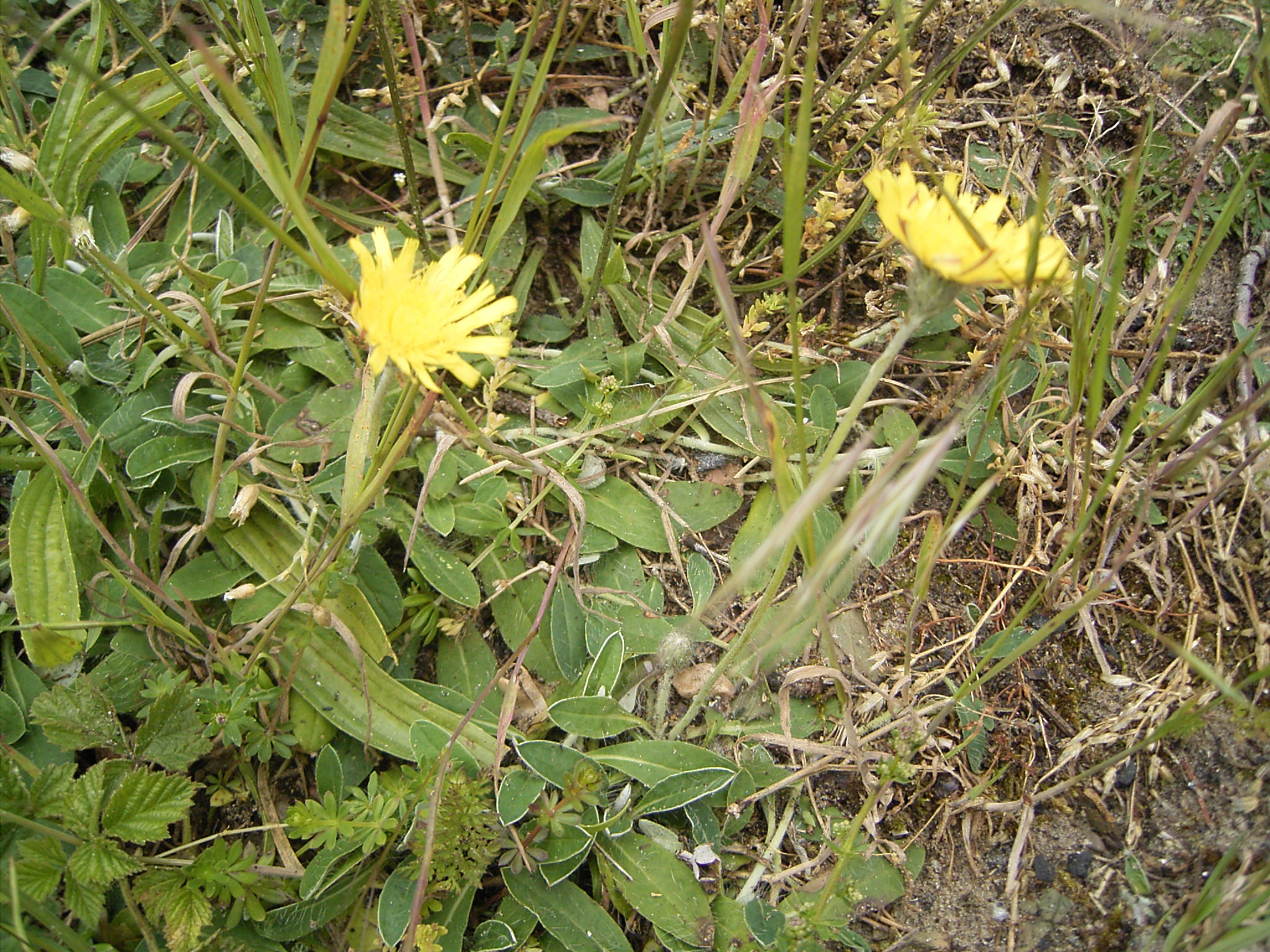 Diez et al. Examine how environmental and management heterogeneity interact to influence patterns of Hieracium pilosella (Asteraceae) inasions in the South Island of New Zealand. The spread of H. Pilosella in New Zealand is threatening native habitats (tussock fields) and the livestock grazing industry. Diez et al. Asked how environmental and management regimes affect H. Pilosella abundance and distribution across six large farms on the South Island. This is an interesting and important question, not just because they are examining how human-caused and ecological variation interact to affect H. Pilosella dynamics, but also because these sources are heterogeneity are realized at different spatial scales.
Diez et al. show that the abundance and distribution of H. Pilosella was significantly affected by the interaction of habitat type (i.e., short vs. tall tussocks) and farm management strategies (i.e., fertilization and grazing rates). At larger scales, H. Pilosella was more abundant in tall tussock habitats and was unaffected by fertilization, while in short tussocks, it was less abundant in fertilized patches. At small scales, H. Pilosella was less likely to be found in short tussocks with high exotic grass cover and high productivity (measured as site soil moisture and solar radiation). Conversely, in tall tussocks, H. Pilosella was more likely to be found on sites with high natural productivity. Diez et al. were able to tease these complex causal mechanism apart by using Bayesian multilevel linear models, for which they included example R code in an online appendix.
While it is a truism in ecology to say that heterogeneity affects ecological patterns, this paper deserves mention because they convincingly show that the spread of noxious exotic plants in a complex landscape, can potentially predicted by understanding the invader success in different habitat types and land management strategies. In their case they show how human activities, which were not designed to affect H. Pilosella, can strongly affect abundance in different habitat types. This type of approach to understanding invader dynamics can potentially arm managers with the ability to use existing land use strategies to predict how and where further invader targeting would be most useful.
Diez, J., Buckley, H., Case, B., Harsch, M., Sciligo, A., Wangen, S., & Duncan, R. (2009). Interacting effects of management and environmental variability at multiple scales on invasive species distributions Journal of Applied Ecology DOI: 10.1111/j.1365-2664.2009.01725.x


3 comments:
These articles are fantastic; the information you show us is interesting for everybody and is really good written. It’s just great!! Do you want to know something more? Read it...: Great investment opportunity in Costa Rica
Costa rica Fishing
http://www.fishingcostaricaexperts.com/
Los Suenos Costa Rica,
Los Suenos Costa Rica Condos For Rent,
Los Suenos Costa Rica Vacation Rentals,
Los Suenos Condos For Rent,
Los Suenos Vacation Rentals,
Los Suenos Condominiums,
Los Suenos Condo Rental
Post a Comment